The Holiday With A Second Chance
 Back to Main Page
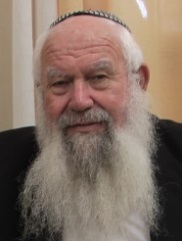
By: Rav Itzchak Jamal
In our parsha, we read about people who were impure and couldn't perform the Pesach (offer the sacrifice), and now want to make up the Pesach offering:
"And there were people who were impure because of the soul (which departed from the body) of a man, and they could not perform the Pesach on that day. And they came before Moshe and before Aharon on that day. And these men said to him: We are impure because of the soul of a man. Why should we be excluded, and not bring HaShem's sacrifice at its appointed time among B'nei Israel? And Moshe answered them: Stand and I will hear what HaShem will command regarding you." (Bamidbar 9)
And their request seems surprising, since the Torah said that one who is impure cannot bring his sacrifice, so why should they protest this?
In his commentary, the Ohr HaChaim asks:
We must examine their argument "why should we be excluded". Aren't they themselves giving the answer: 'we are impure'? So what are they asking for? To be given a new Torah?!
And another question arises here: we didn't encounter an example like this regarding other holidays, since when someone is unable to offer the Festival offering on Sukkot or Shavuot, he has no second opportunity. So why specifically here, regarding Pesach, did this Halachic innovation of Pesach Sheni emerge?
We can offer two answers to these questions.
The first is: As we know, the only two positive commands which carry the punishment of karet for failing to perform them are the Pesach sacrifice and Brit Milah.
"And an uncircumcised male who will not circumcise the flesh of his foreskin – that soul will be cut off from his nation since he has breached My covenant." (Bereshis 17:14)
"And the man who was pure and was not in a far place, and refrained from performing the Pesach, that soul will be cut off from his nation since he did not offer Hashem's sacrifice at its appointed time. That man will bear his iniquity."
Why are these two Mitzvot exceptional? We can understand the severe punishment for not performing the Mitzvah of Brit Milah since it is the mark that a Jew makes on his son and in this way he expresses his desire to be a Jew and to be connected by the Brit (= covenant) to Am Israel and to HaShem. One who does not circumcise removes himself from the covenant. It is as if he is demonstrating that he does not want to be part of k'hal Israel and therefore it is logical that he is not worthy of being part of the k'hal (community) and consequently 'that soul will be cut off'. But why does refraining from doing the Pesach sacrifice carry the same punishment?
We must keep in mind that the Pesach offering is a special sacrifice. On one hand it is a korban yachid (sacrifice of an individual), as every Jew or group of Jews has a designated lamb. On the other hand, the Pesach has Halachic elements of a korban tzibur (communal, national sacrifice). It supersedes Shabbat and it supersedes impurity like a korban tzibur. What is the significance of this sacrifice?
The Pesach sacrifice is the first act which we did as a nation, and therefore it is in essence a declaration of allegiance to Am Israel and its Torah, to the Eternity of Israel, to its vision and dream. The meaning of performing the Pesach is being part of nation, and therefore missing doing the Pesach means being rejected and distanced. Therefore, specifically regarding the Pesach holiday, people came and requested a second chance, and only for this holiday a second chance was given to offer the sacrifice, since it is analogous to Yom HaAtzmaut, when every year each individual expresses anew his desire to belong to the nation.
And the Midrash on Shir HaShirim says:
"HaShem said to Israel: let go of your evil deeds and repent immediately, and know that I am the Lord… by doing two Mitzvot which involve blood: the blood of the Pesach and the blood of circumcision. And this is what is written (Yechezkel 16): 'And I passed by you and I saw you wallowing in your blood, and I said to you in your blood you will live, this is the blood of Pesach, and I said to you in your blood you will live, this is the blood of circumcision."
And consequently we can understand the words of the Rambam who writes about the importance of awareness that one is part of the klal (community):
One who excludes himself from the ways of the community – even though he does not transgress prohibitions, but he disassociates himself from the People of Israel, and his observance of Mitzvot is disengaged from them, and he does not identify with their sorrows and does not participate in their fasts, but rather he goes about his way like one of the gentiles of the earth as if he is not one of them (the Jews) – he has no part in the World to Come.
And specifically on the holiday which demonstrates the great connection between all the individuals and our entrance into a covenant, the Torah gives a second chance in order that every one will be able to enter into the covenant with HaShem and with His nation every year anew.
A second explanation for Pesach Sheni can be found in the continuation of the parsha. After the Torah describes the beginning of B'nei Israel's journeys, and before the story of the mittonenim (complainers) there is a short parsha which is parenthesized by two upside – down letters 'nun':
"And it was, when the Aron (Ark) moved forward, Moshe said: Rise, HaShem, and Your enemies will be scattered, and those who hate You will flee from before You. And when it rested, he said: Return, Hashem, to the myriads of the thousands of Israel." (Bamidbar 10: 35-36)
The Ramban brings the words of the Gemara regarding the upside down signs, which interpose between two puranuyot (misfortunes), but asks: what was the first calamity?
"'And it was, when the Aron moved forward' – the Torah made signs before and after it to show that this is not its place. So why was it written here? To separate between two calamities, as in all the Scriptures. And the Rav (Rashi) did not explain what was the (first) calamity which it was necessary (for verses 35-36) to separate between, since the Torah did not mention a calamity before the verse 'And it was, when the Aron moved forward.' And from the words of the Gemara, it follows that the second misfortune was 'And the nation were like complainers' (Bamidbar 11:1) and the first one was, as is written: 'and they travelled from the mountain of HaShem.'"
The Ramban explains:
"This Midrash is explained by the Aggadah: They journeyed from Har Sinai joyfully, like a child who runs away from school. They said: Lest He should add and give us more Mitzvot. And this is the meaning of 'and they travelled from the mountain of Hashem' – their intention was to remove themselves from there because it was the mountain of HaShem, and this was the first calamity. And the parenthetical verses were interposed in order that there will not be three consecutive calamities, and they (Israel) would consequently be muchzakim (habitual, confirmed) in misfortune."
However the question arises: why did the Sages see fit to accuse B'nei Israel and add a sin which was not mentioned explicitly in the Scripture? The Torah says: 'And they travelled from the mountain of HaShem' - how did Chazal find in these words an indication of sin? Additionally, we can argue: all of Israel's journeys were done according to Hashem's command, so what complaint can be made against them, since they travelled after the pillar of cloud?
These questions can be answered in this way: The verse regarding kriyat yam suf says: "Vayasa Moshe (And Moshe caused [Israel] to journey) from Yam Suf and they went out to Midbar Shur." (Shemot 15:22)
And Rashi explains:
"Vayasa Moshe – he coerced them to journey against their will, since the Egyptians adorned their horses with silver and gold jewelry and precious stones, and Israel took them out from the water, and the booty from the sea was greater than the booty of Egypt, as it says (Shir HaShirim 1:11): 'We will make you columns of gold with silver studs', therefore Moshe had to force them to leave."
Now we can explain, that since the Torah did not describe the journey from Mount Sinai with the same terminology as it did regarding Yam Suf, Chazal understood that they had no objection to moving on, and this demonstrates that B'nei Israel disparaged the lofty value of the Torah.
In other words, 'like a child running away from school' does not necessarily mean that they left joyfully, with music and dancing. The very fact that they did not oppose leaving testifies to their inner sentiment, to lack of appreciation of the Torah. A person's desires and aspirations cast light upon his spiritual condition.
The antithesis of the 'escape' from the mountain of HaShem is the men who were impure, and in spite of that they searched for a way to be obligated to bring the Pesach sacrifice. Rabbi Tzaddok of Lublin writes about these people (Pri Tzaddik, Pesach Sheni ב):
"And behold, the men who were impure because of the soul of a deceased man were righteous men – either they were Mishael and Eltzafan (who carried the bodies of Nadav and Avihu out from the Mishkan) or they were the bearers of the coffin of Yosef, and according to the law they were exempt from the first Pesach, since one who is involved in a Mitzvah is exempt from doing a different Mitzvah (in a situation like this, where they cannot both be performed). So why were they so forceful as to come before Moshe Rabbenu of blessed memory, with a great cry of 'why should we be excluded, etc.' and what was the deficiency (of missing the Pesach) from their perspective? Their cry came because they greatly desired to perform the Mitzvah of offering the Pesach sacrifice at its appointed time within Klal Israel, and because of this, they were greatly distressed that they did not merit to approach the Kodesh along with Klal Israel at the appointed time. And for this, Moshe Rabbenu answered them: 'Stand and I will hear' as it says (Brachot 26b): the word 'standing' expresses tefillah, meaning: pray for this from the depths of your hearts to HaShem, and through your cry and longing, you will draw HaShem's word to me, as Israel drew the entire Torah through their great desire, and by virtue of that, I will hear what HaShem will command regarding you. And so it was: by their prayer, they brought about the innovation of the law of bringing Pesach Sheni, which implies that there is hope for every soul in Israel, even for one who is impure and one who is far away."
According to Rabbi Tzaddok, this Halacha was innovated specifically on Pesach Sheni because in this instance, there was desire, there was yearning, and there was a longing to perform Hashem's Mitzvot, which is something we did not encounter anywhere else. And from this, one must learn how treasured (man's) desire is in Hashem's eyes, to the point that He added a parsha in the Torah because of the greatness of their longing.
And this is the point of Pesach Sheni, which we recall every year: to teach us how powerful yearning is, that it can even create a new parsha, to surmount all the obstacles and to come close to Hashem. And therefore, because of their powerful desire, they merited this reward, not only for themselves but for all the generations - one who was prevented from offering the Pesach can make it up. For HaShem examines a man only according to his yearning and his desire, as it is written: "May the heart of those who seek HaShem rejoice."
Shiur ID: 9653
Do you have a comment or question on the shiur?
Comment below and we'll join the discussion
Add your comments:
.jpg)
.jpg)